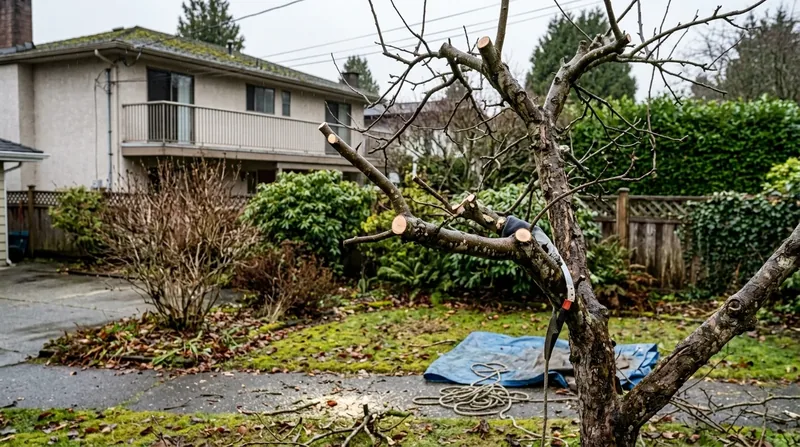




Fruit tree pruning in Richmond demands a different approach than general tree trimming. Apple, plum and cherry trees on older west-side lots need shaping for airflow, sunlight and fruit production, not just size control. Our ISA Certified Arborists understand how to balance vigour with yield, working with the dormant season to maximize your harvest while keeping trees healthy and structurally sound. Whether your trees are producing poorly, crowded with deadwood or simply overgrown, we prune for results.
Why fruit trees need specialist pruning
Backyard fruit trees in Richmond grow in tight spaces, often competing with fences, rooflines and neighbouring properties. Standard hedge trimming or crown reduction leaves you with dense foliage that blocks light and traps moisture, inviting disease and reducing fruiting. Proper fruit tree pruning opens the canopy, removes crossing branches and deadwood, and trains the tree to direct energy into productive growth rather than excessive vegetative mass.
- We remove deadwood and diseased branches that harbour pests and fungal issues.
- We thin crowded interior growth to improve air circulation and light penetration.
- We shape the canopy to encourage lateral fruiting spurs and balanced branch structure.
- We respect the tree's natural form rather than forcing it into an unnatural silhouette.
- We prune during dormancy (late fall to late winter) when the tree is least stressed and wounds heal cleanly.
This approach delivers healthier trees, fewer pest and disease problems, and consistently better fruit quality year after year.
Local insight: Richmond's maritime climate and heavy spring rains create ideal conditions for fungal canker and powdery mildew on fruit trees. Proper air circulation through thinned canopies is your best defence. Trees pruned in winter are ready to push strong growth when warm weather arrives.
How we prune your fruit trees in the Richmond area
Our process begins with a visual assessment of the tree's age, variety, health and fruiting history. We identify dead or diseased wood first, then work inward to thin congested areas and remove crossing branches. Each cut is made just outside the branch collar to encourage proper healing. We work systematically through the canopy, stepping back frequently to assess balance and form. The goal is a tree that looks naturally open, not artificially pruned.
- We inspect the entire tree for dead, diseased, crossing or rubbing branches before making any cuts.
- We remove any branches showing canker, sunscald damage or evidence of pest activity.
- We thin the interior canopy to allow light and air to reach the lower and inner branches.
- We make clean cuts at the branch collar using sharp, properly maintained tools.
- We haul away all pruning debris and chip material on site where possible.
The result is a fruit tree that flowers more reliably, produces larger and sweeter fruit, and stays healthier with fewer interventions needed in future years.
Real example: A 35-year-old apple tree in Kitsilano was producing small, sparse fruit and showing signs of canker. After dormant-season pruning to remove 40 per cent of crowded interior growth and all diseased wood, the tree flowered heavily the following spring and produced the homeowner's best harvest in a decade.
Pruning methods for different fruit trees
| Tree Type | Pruning Approach | Timing |
|---|---|---|
| Apple and pear | Thin crowded growth, remove crossing branches, maintain open centre. Fruit forms on spurs, so preserve lateral branches. | Late fall to late winter (dormancy) |
| Cherry | Remove deadwood and diseased branches only. Cherry is prone to canker; avoid heavy dormant pruning. Light summer thinning acceptable. | Early summer (post-bloom) or very light dormant work |
| Plum | Similar to apple. Thin interior, remove crossing branches. Fruit forms on short spurs along main branches. | Late fall to late winter (dormancy) |
| Peach and apricot | Prune more aggressively to maintain vigour. Remove two-year-old wood to encourage new fruiting shoots. Open canopy is critical. | Early spring (just before budbreak) or late summer |
Each species responds differently to pruning cuts and timing. Our arborists adjust technique based on the tree's variety, age and local growing conditions. Structural and seasonal pruning for ornamental trees follows similar principles but prioritizes safety and form over fruit production.
Regulatory and safety considerations
Fruit tree pruning on your own property is generally straightforward, but the City of Richmond may require a permit if the tree removal portion of the work exceeds certain thresholds. When we work near private electrical service entrances, we maintain safe approach distances and never touch the public distribution network operated by BC Hydro. We document all work and can provide an arborist report to support any permit application if needed. Our crews are fully insured and carry liability coverage for all work in Richmond and the surrounding municipalities.
If your fruit tree shows signs of disease (canker, sunscald, leaf curl, shot-hole), we can perform a tree disease diagnosis before pruning to ensure we address the root cause. Many fruit tree problems are prevented entirely by proper dormant-season pruning and good air circulation.
Timing your fruit tree pruning
The best time to prune most fruit trees in Richmond is late fall through late winter, when the tree is dormant and wounds heal cleanly without risk of disease entry. Pruning during active growth (spring and summer) can stress the tree and attract pests. Cherry trees are an exception and benefit from very light dormant work or early summer pruning after bloom, because heavy dormant cuts invite canker. For emergency removal of dead or hazardous branches, we work year-round and can often visit within 24 hours.
Plan your pruning for November through March. This gives the tree time to compartmentalize wounds before spring growth begins. If your tree has been neglected for several years, we may recommend a two-year approach, removing no more than 25 per cent of live wood in the first year to avoid shocking the tree.
Call us at (778) 652-1933 to schedule a free estimate. We assess your tree's condition, discuss your fruiting goals, and provide a clear quote with no hidden costs. Contact us today or visit our pricing page for a full breakdown of costs.
Prices Fruit Tree Pruning in Richmond — Indicative pricing
| Service | Price | Details |
|---|---|---|
| Small fruit tree pruning (up to 6 metres) | From $185 | Single apple, plum or cherry tree, light to moderate thinning and deadwood removal |
| Medium fruit tree pruning (6 to 10 metres) | From $275 | Mature tree requiring substantial interior thinning, diseased wood removal, and structural shaping. |
| Large or neglected fruit tree | From $425 | Overgrown or multi-stemmed tree, heavy deadwood, severe crowding, two-year programme possible |
| Multiple fruit trees | From $450 | Two to four trees on same property, discounted per-tree rate |
| Travel and site assessment | Included | Free estimate within Richmond and the surrounding area, no obligation. |
| Free quote | 24 hours | Call (778) 652-1933 or request online |
Indicative prices; free, personalized estimate within 24h at (778) 652-1933.