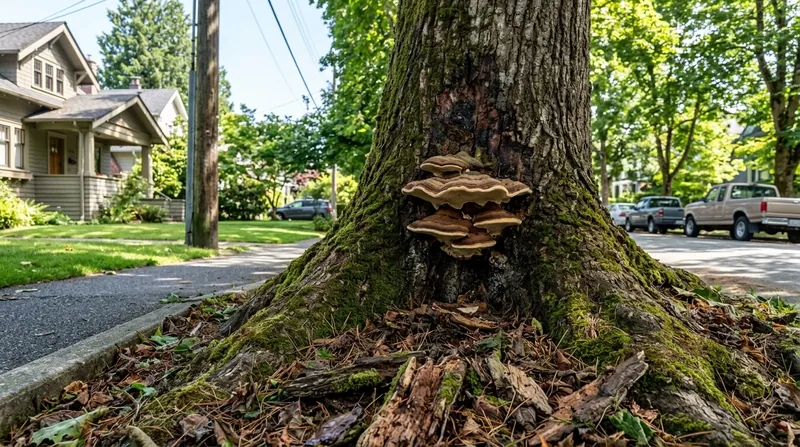




Discoloured leaves, bark damage, canopy thinning or sudden decline can signal disease, pest damage, root stress or environmental injury. A tree disease diagnosis in Richmond identifies the likely cause and lays out realistic treatment or removal options before you spend money on the wrong solution. Our ISA Certified Arborists inspect the tree, look for visual signs and structural clues, and give you a clear written assessment. We have served the Richmond area and surrounding municipalities since 2011, and we understand the species common here: silver and sugar maples, red and white oaks, birches, ash trees, and the cedars that line nearly every property in residential neighbourhoods. Call us at (778) 652-1933 for a free estimate, or read on to learn how we work.
Why tree disease diagnosis matters in Richmond
A tree in decline is not always dying, and a dying tree is not always a candidate for removal. Sometimes the problem is treatable, sometimes it is cosmetic, and sometimes removal is the only safe choice. Without a diagnosis, you risk wasting money on a treatment that will not work, or cutting down a tree that could have recovered. Richmond's mature street trees, ravine lots with steep terrain, and tight backyards make diagnosis especially important: a tree that looks sick from one angle may be stable from another, and the cost to remove it safely can be substantial.
We inspect the following to build a diagnosis:
- Crown density, leaf colour, and the pattern of branch loss across the canopy.
- Bark condition, including cracks, oozing, cankers or missing sections.
- Root collar and soil around the base for signs of compaction, girdling roots or recent grade change.
- Wood quality in the lower trunk and major limbs, tested by probing or sounding.
- Pest damage, including scale, aphid honeydew, or exit holes from wood-boring insects.
Once we have the full picture, we explain what we found and what it means for the tree's future. If treatment is possible, we outline the cost and likelihood of recovery. If removal is safer or more practical, we explain why and point you to full tree removal or an arborist report to support a permit application with the City of Richmond.
Local insight: In Richmond and Delta, we diagnose roughly 40 per cent of declining trees as salvageable with pruning or targeted treatment. The other 60 per cent require removal, often because the cost of treatment exceeds the tree's remaining life expectancy or because structural damage makes it a hazard near a house or hydro line.
How we diagnose disease and pest damage
Our process is straightforward and thorough. We visit your property, examine the tree from ground level and, if safe, climb or use a bucket lift to inspect the upper canopy and branch structure. We take photographs and notes, then sit down with you to walk through what we found and what it means.
The diagnosis covers these key areas:
- We identify the species and its typical health profile in in Richmond and the surrounding area.
- We look for signs of specific pests, such as emerald ash borer on ash trees or scale insects on maples and oaks.
- We assess root health by examining the soil, root collar and lower trunk for girdling, compaction or disease entry points.
- We evaluate structural integrity, including branch attachment angles and the risk of failure in wind or ice.
- We document environmental stress: drought, flood, soil pH change, or damage from construction or utility work.
You walk away with a written summary and a clear next step. Many homeowners in the Richmond area use this diagnosis to get a second opinion before committing to removal, or to decide whether structural pruning or pest treatment is worth the investment.
Real example: A homeowner in Kitsilano noticed her 40-year-old oak losing branches on one side. Our diagnosis revealed a girdling root from a fence installation 15 years earlier, plus early anthracnose from wet springs. We recommended crown reduction and improved drainage, which cost $800 and extended the tree's life by an estimated 10 to 15 years. Without diagnosis, she would have paid $3,500 to remove it.
Common tree diseases and pests we diagnose in the Richmond area
in Richmond and the surrounding area's climate and species mix create a predictable range of problems. We see these regularly:
| Condition | Signs | Action |
|---|---|---|
| Emerald ash borer (EAB) | Canopy thinning from the top, D-shaped exit holes in bark, woodpecker damage. | Early detection allows injections in late spring. Late-stage trees require removal. |
| Anthracnose (maples, oaks) | Brown patches on new leaves, twig dieback, canker formation on branches. | Improve air flow with pruning, remove deadwood. Most trees recover without treatment. |
| Girdling roots | Uneven crown loss, bark damage at base, tree decline on one side only. | Careful root surgery or gradual pruning to reduce stress. Tree may stabilise. |
| Winter damage and ice storm injury | Broken branches, split crotches, bark peeling from freeze-thaw cycles. | Remove broken wood, cable major splits if tree is otherwise healthy. Document for insurance. |
| Root rot and soil compaction | Slow decline, shallow root collar, poor leaf colour even after watering. | Improve drainage, aerate soil, reduce crown weight. Prognosis depends on extent of rot. |
Each diagnosis is specific to the tree and your goals. If the tree is a mature specimen with sentimental value, we may recommend investment in treatment. If it is declining rapidly or poses a risk to a house or hydro line, removal is often the practical choice.
When to call for diagnosis in the Richmond area
You do not need to wait for a tree to look obviously sick. Early diagnosis catches problems when options are still available. Contact us if you notice any of the following:
- Canopy thinning or loss of leaves earlier than neighbouring trees of the same species.
- Unusual branch breakage, especially on otherwise healthy-looking trees.
- Bark damage, oozing sap, or visible cracks and cavities in the trunk.
- A tree that survived an ice storm or windstorm but now looks stressed or asymmetrical.
- Pest activity: sawdust at the base, visible insects, or sticky honeydew on leaves and branches.
- Sudden decline after construction, soil grading, or utility work on your property.
Many homeowners call us to diagnose a tree before deciding whether to keep it or remove it. Others use diagnosis to document damage for an insurance claim after a storm. The free estimate gives you the information you need to make a confident choice. Call (778) 652-1933 or visit our contact page to book.
Permits and documentation
The City of Richmond may require a permit for a private tree removal, and a diagnosis from an ISA Certified Arborist strengthens your application. We document the tree's condition, any hazards we identify, and our recommendation in a format the City recognises. If you need a formal arborist report for a permit or insurance claim, we can provide that as a separate service.
We also respect approach distances to BC Hydro lines on your property. If the tree is near your private service entrance, we work safely and document our clearance to protect your household connection. We never touch the public distribution network.
Homeowners across Richmond, West Vancouver, Delta and the surrounding municipalities have used our diagnosis to make informed decisions about trees worth saving and trees that need to come down. We make the process clear, fair and professional. Get your free estimate today: (778) 652-1933.
Prices Tree Disease Diagnosis in Richmond — Indicative pricing
| Service | Price | Details |
|---|---|---|
| Tree disease diagnosis and assessment | From $150 | Visual inspection, pest and disease identification, written summary and treatment or removal recommendation |
| Diagnosis with climbing inspection | From $250 | Includes safe access to the upper canopy and branch structure for detailed wood quality and crown assessment |
| Formal arborist report for permit or insurance | From $400 | Detailed written report suitable for City of Richmond permit applications or insurance documentation |
| Multiple trees on one property | From $300 | Diagnosis of two to four trees in one visit, combined assessment and recommendations |
| Travel and site visit | Included | In Richmond and the surrounding area, there is no extra charge for travel. |
| Free estimate | Free | Call (778) 652-1933 or use our contact form for a no-obligation quote within 24 hours |
Indicative prices; free, personalized estimate within 24h at (778) 652-1933.