Understanding the Core Difference
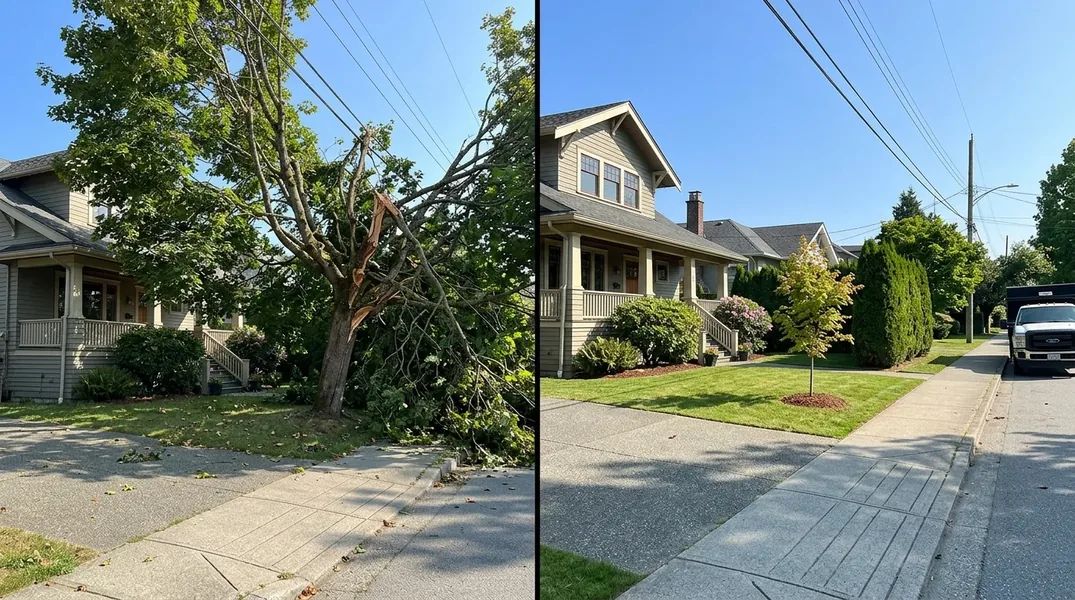
When a tree on your property shows signs of decline, disease or structural weakness, the first question is rarely straightforward: should it be trimmed back to health, or removed entirely? The answer depends on the tree's overall condition, its location, and the specific problems it presents. Tree Trimming & Crown Reduction preserves the tree while improving its structure and appearance, whereas Full Tree Removal eliminates the tree altogether and opens space for new growth or landscaping.
The distinction matters because trimming is less invasive, less costly, and preserves the environmental and aesthetic benefits a healthy tree provides. However, removal becomes necessary when a tree poses a genuine safety risk, suffers from terminal disease, or blocks essential views or utilities. In Richmond, where mature trees contribute significantly to neighbourhood character, making the right call the first time prevents regret and wasted expense.
Signs That Trimming Can Save Your Tree
A tree is often a good candidate for trimming if it shows one or more of these characteristics: uneven branching, crossing or rubbing limbs, a dense canopy that blocks light, or minor storm damage to outer branches. Trees with structural issues caused by poor growth habit, such as a weak crotch angle or included bark, can frequently be improved through targeted Structural & Seasonal Pruning. Young to middle-aged trees respond well to corrective pruning, as do species naturally prone to dense growth, such as maples and oaks in the Richmond area.
If the tree is otherwise healthy, pest or disease damage is confined to a single limb or small section, or if the problem is primarily aesthetic (overgrowth near a window, interference with power lines at a safe distance, or an unbalanced crown), trimming is almost always the first choice. Arborists prefer to preserve trees whenever possible because a well-maintained tree continues to add property value, provides shade and privacy, and supports local wildlife. A professional Vancouver Tree Trimming assessment can identify which branches to remove and which to retain for the best long-term outcome.
When Removal Becomes the Right Decision
Removal is warranted when a tree is dead, dying, or poses an unacceptable risk to people, property, or utilities. A tree that is more than 50 percent dead, exhibits signs of terminal disease such as extensive canker or root rot, or has a trunk that leans dangerously is not a candidate for recovery through trimming. Similarly, if a tree's root system is compromised by construction, soil compaction, or damage, or if its structure is so weak that major limbs are likely to fail, removal prevents costly damage and liability exposure.
In Richmond, hazard trees near homes, driveways, or overhead power lines warrant particular attention. A tree with multiple large deadwood sections, visible cavities, or a severely split trunk cannot be made safe through pruning alone. If the tree is also in a location where a falling limb could strike a structure or vehicle, or where root damage to a septic system or foundation is occurring, removal becomes not just an option but a responsible choice. 24/7 Emergency Tree Removal is essential when a tree has already failed partially or poses an immediate threat after a storm.
The Professional Assessment Process
The most reliable way to decide between trimming and removal is a professional tree health assessment. An ISA Certified Arborist examines the tree's overall vigour, the extent and location of damage or disease, the structural integrity of the trunk and major limbs, and the tree's age and species. They assess whether the problem is localized and treatable, or systemic and terminal. This evaluation is sometimes called a hazard tree assessment or tree risk assessment, and it forms the foundation of any sound decision.
During a tree risk assessment in Richmond, an arborist looks for signs of decay, pest infestation, root problems, and structural defects. They evaluate the tree's proximity to structures, utilities, and people, and they consider the likelihood and consequence of failure. This professional perspective is invaluable because homeowners often overestimate a tree's health or, conversely, assume a tree must be removed when trimming would suffice. An arborist report also supports any permit application with the City of Richmond, which may require documentation for a private tree removal. Contact Vancouver Tree Trimming at (778) 652-1933 to request a free estimate and professional assessment.
Cost and Practical Considerations
Trimming is generally less expensive than removal, but the cost of either service depends on tree size, location, complexity, and site access. A large tree in a confined space or near structures will cost more to trim safely because the work requires careful rigging and precise branch placement. Removal costs more in absolute terms but may be the better long-term investment if the tree is in decline and will require repeated expensive trimming over the next few years. Check our tariffs for a clear picture of the investment required.
Beyond the immediate service cost, consider the long-term outlook. A tree that is 80 percent healthy and responds well to structural pruning is worth the cost of trimming every few years. A tree that is 20 percent healthy, heavily diseased, or structurally unsound is not worth the recurring expense of attempted recovery. Removal also opens the possibility of planting a new, disease-resistant species better suited to your site and climate. In Richmond, where ice storms and windstorms can stress mature trees, a proactive approach to health assessment prevents emergency situations and the higher costs they entail.
Next Steps: Get a Professional Opinion
If you are uncertain whether your tree should be trimmed or removed, the safest course is to arrange a professional evaluation. Vancouver Tree Trimming serves Richmond and the surrounding area with certified arborist assessments, detailed tree risk evaluations, and transparent recommendations. We do not push removal when trimming is appropriate, nor do we recommend expensive ongoing trimming for a tree that is genuinely at the end of its life.
Contact us today at (778) 652-1933 or visit https://vancouver-tree-trimming.ca to request your free estimate. Our team will assess your tree, explain the options, and help you make a decision that protects your property, your family, and your investment in the landscape. Whether the answer is trimming, removal, or a combination of both, we deliver professional, fully insured service and a clear explanation of what we recommend and why.
Looking for a professional in Richmond? Vancouver Tree Trimming responds quickly for all your tree trimming needs.
Get a free estimateOur services : Full Tree Removal · Tree Trimming & Crown Reduction · Structural & Seasonal Pruning